
What happens once your van is here
Previously, we talked about the process of getting your camper conversion into our queue. We wrote about that part in another blog - Before the Build, There's a Conversation. This post picks up later in the process, the day you drop your van off.
Handing over the keys to a vehicle you just bought and watching it disappear into a shop for a few weeks or a few months is a strange feeling. It’s fair to wonder what actually happens to it while it’s here. So, we wanted to talk about the path your van takes through our shop, from the first thing we do when it arrives to the day you drive it home.
The build starts before the van arrives
Before your van shows up, a good deal of work has already gone into it. When you approved your build, the front office turned that into a “build sheet”, a document that lists your platform, your name, every option you chose, and any special notes. The shop works from that sheet to plan the actual build.
This document does more than sit in a folder. It lets us order parts ahead of time, so the right materials are here when the van shows up, and it stays with the van the whole way through the process. It also identifies any questions that have to be answered before anyone can begin building, because many choices affect something downstream. The addition of a heater, for instance, changes how the cabinets get built, so if that is still open when the sheet comes through, we chase it down before the cabinet work starts.
The first thing we do is protect the van
By the time you drop the van off, that prep work is done and the “build sheet” is waiting. You hand over the keys, the van comes into the shop, and the first thing we do is protect it, before any tool touches it. We tape off the horizontal surfaces, wrap the steering wheel, protect the seats, and put mats down on the floorboards.
Your van moves around a lot while it’s here, up on the lift and rolled between work areas, and the covering keeps it clean and protected along the way. Making sure that your van remains as pristine as when it was when you dropped it off is important to us.
Where your van goes, and who works on it
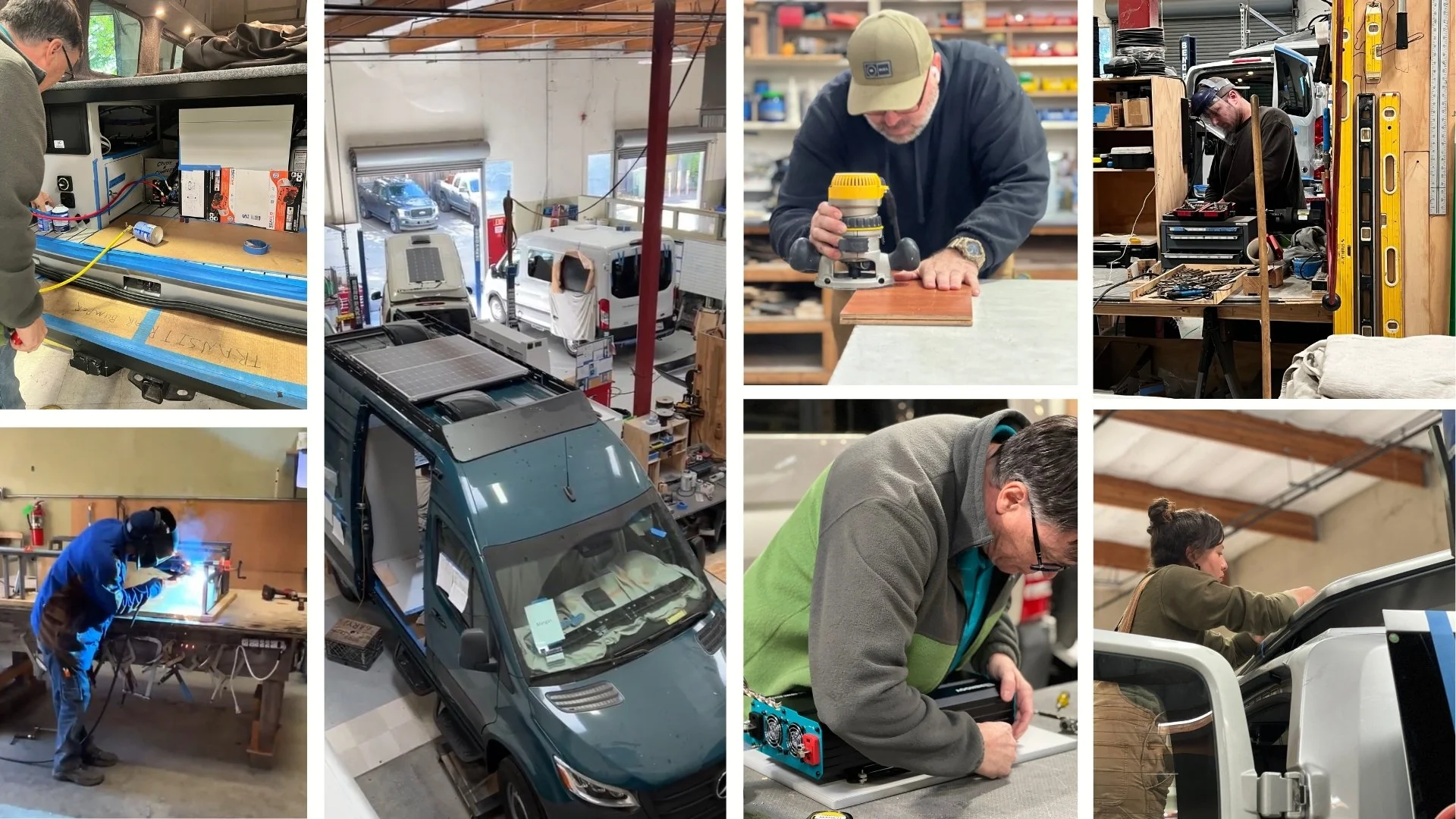
Your van does not sit in one spot during its stay at GTRV. It moves between different work areas and technicians as the build progresses, because each part of the build goes to the person best suited for it.
The lift. Anything that happens underneath the van goes here: wiring that runs along the underside, water and propane tanks that mount below the floor, and heaters that need access to the engine and the charging circuit. The diesel heater in particular is a long, involved install, so it goes to Chelsi, who came to us with heater experience. Chelsi is also our window specialist.
The metal side. Cutting and welding happen on one side of the shop, at the welding station, kept separate on purpose so the metal dust and the mess stay away from the finished interiors. Rich handles the welding, with Erik stepping in when necessary.
The cabinet and assembly bays. This is where the interior comes together. A van with a lot of cabinetry spends much of its time near the woodshop, where Kyle, our primary cabinetmaker, does the design, the CAD work, and the build. Erik may help with the assembly of cabinetry here, as well as Kevin, who came out of the construction industry.
The pop-top install is involved enough that it has its own write-up. If you want the detail on how that goes, it is in our pop-top post.
The decisions that come up mid-build
On a full custom conversion, not everything can be settled before the build starts. Some things only become clear once the van is open and the build is underway. If any of these affect the function, or aesthetics, of your build, we bring you into the decision making process.
One recent build had side-facing bench seats, and the customer wanted seatbelts added to them. On a seat that faces sideways, a seatbelt is a real safety problem, because in a sudden stop your body loads it in a way it is not built for. We walked through all of it with the customer, shared the research, and had detailed conversations about it so everyone understood the tradeoff.
Then there are the decisions that impact the cost. In a custom build there are often choices that get made mid-build. When that happens we go over the costs together and let you decide how you want to move forward.
Some things we just deal with on our own. On a Sienna, for instance, the wiring can route differently depending on where a column lands, and we might not know until we open it up. There is no choice for you to make there, so we figure it out and keep moving.
Staying in touch while it is here
How much you hear from us while your van is in the shop depends on the build.
A pop-top is usually in and out in three or four weeks. Once your colors and options are locked in, there is not a lot to report, and we reach out if something changes. A full conversion is here longer, sometimes a couple of months, and those builds tend to have milestones along the way. Those checkpoints are usually when you will hear from us.
When a step takes longer than we expected, we tell you, and we tell you why.
Pickup day and the walkthrough
Pickup day is busy on our end. We are doing the final cleaning, taking care of the last small details, and making sure it meets our standards. The goal is for everything to be right before you get there.
When you arrive, Joseph usually has the van pulled up out front, ready for you to walk right into it. Then comes the walkthrough, an orientation to your van that goes system by system, usually the electrical first, then the plumbing, then the propane. It takes as long as you need, and nobody is rushing you out the door.
By this point, most people are pretty excited. The van looks the way they pictured, and they want to learn how all of it works. We put a lot of care into getting those last details right. Word of mouth is a big part of how this shop stays busy, and that comes from people being happy with what they picked up.
And then you drive it home
After the walkthrough, you get in and drive away, and the van is yours. If you want to see what that looks like once people are on the road, our customer spotlights follow real GTRV owners and how they use their vans. You can read the customer spotlights here and here.
Want to talk it through?
Now that you've seen how a build moves through the shop, the next step is the conversation that starts yours.
If you're weighing whether to begin, or just want to think out loud with people who've done this a bunch of times, we're happy to help. Joseph is the first person you'll talk to.
Most of these conversations start like this: "Here's how I want to use it. What makes sense?"
Call Joseph at 888-332-9602 or send us a message here and he’ll get back to you.
Stay in the loop
Our newsletter is where we share what we're learning, thinking about, and building at the shop. Platform insights, practical advice, and the kind of detail that tends to matter more over time.
No hype. No spam. Just useful perspective from people who do this every day.
Subscribe to the GTRV newsletter
If you're still in research mode, these are good next steps:
Before the Build, There's a Conversation
What It Takes to Install a Pop Top
The 80/20 Rule of Van Design: Build for the Life You'll Actually Live
