
A Van Built for the Life They Actually Live
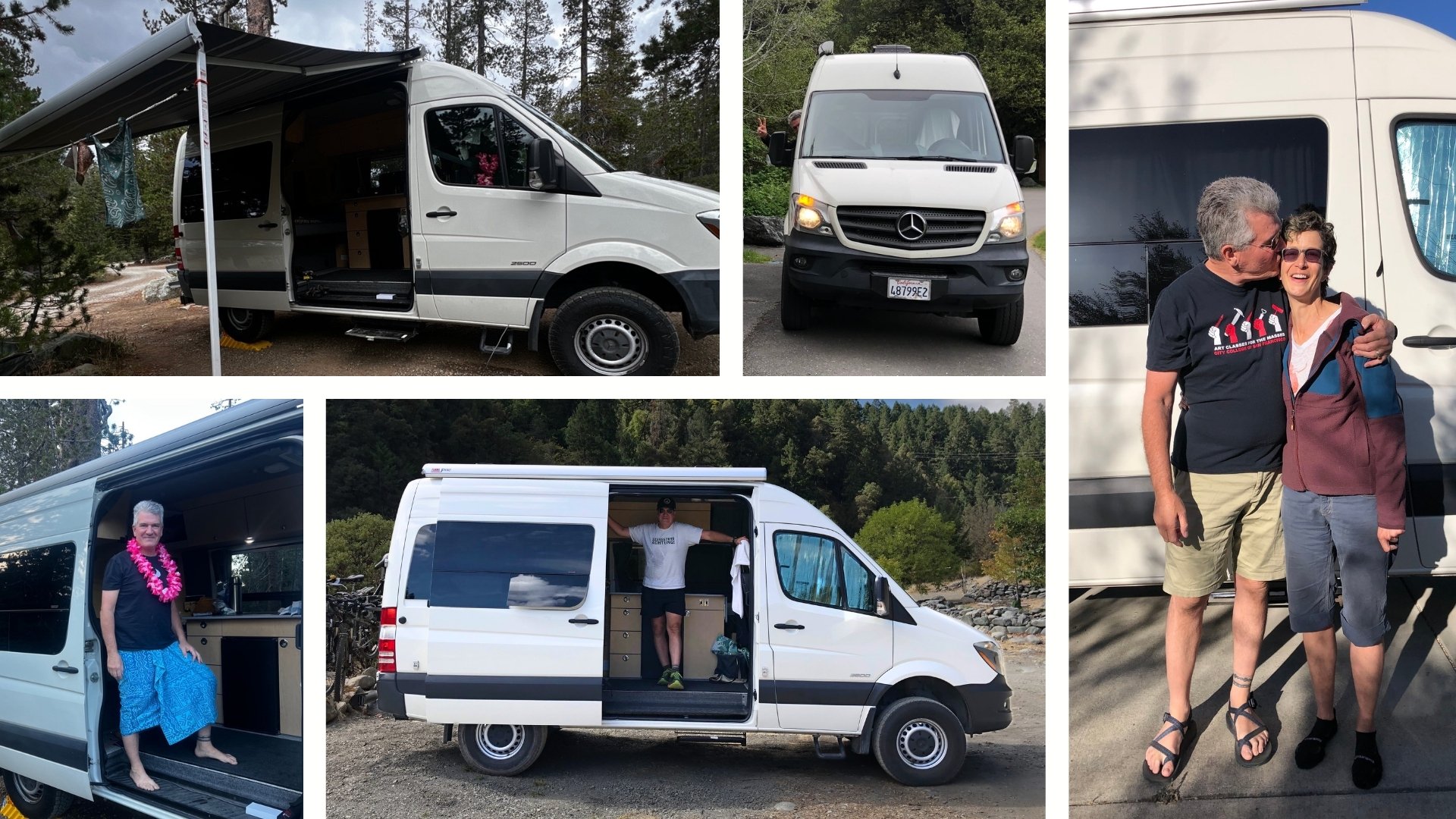
Ten years with the same van
Before Vic and David take the van anywhere, David gets underneath it. He checks the fittings, keeps the water and fuel topped off, and works through the same inspection every time. Some of that comes naturally from his personality, but much of it is a result of his background.
He spent years as a volunteer firefighter in Sonoma County, worked in emergency services, and has spent time in a lot of ERs. That kind of work leaves you with a habit of checking things before you need them.
The van is close to ten years old now, and Vic and David have put a lot into it. They have had some of the systems upgraded, taken it up to Lake Tahoe in the middle of winter, run it out onto BLM land, and brought it to the recent GTRV customer appreciation day.
We spent some time with David to understand what keeps an owner this invested. A conversation with him about the van does not stay about the van for long.
Why it has to be ready to leave in minutes
When Victoria and David got together, the van was for the two of them to travel in. The plan, the one a lot of people have, was to retire and get out. Cross the country, head up to Canada, take their time. Then the 2017 fires came through Sonoma County, and the van started to mean something else.
David knows what an evacuation looks like from the inside. Roads get backed up with traffic. Gas stations run dry. As a result, the van also became the thing they could leave in if they had to, with enough range and supply that they would not have to stop for fuel or water on the way out.
They upgraded to a larger diesel fuel tank, now close to 48 gallons, which gives them around 800 miles without stopping. They had a second water tank added, so they carry close to 40 gallons. They are both aware that the fine particles in wildfire smoke reach deep into the lungs and carry a real risk over time, so they can run a HEPA filter inside and seal the van up against it.
None of that was a consideration when the van was built. If evacuation were all they wanted, David will tell you, the thing would be built very differently, designed to get them out and keep them safe until they could come home. Instead, it’s a multiuse camper conversion, comfortable to live and travel in, but also ready if they ever have to leave fast. That gap, between what the van needs to be and what they chose to make it, comes up again and again with David.
The van came with Vic
Vic bought the van in 2016 and had it built out with her partner at the time. That was before Mark Landon owned GTRV. She knew Mike, who ran the business then, and the van is one of his builds. When Vic and her partner split up, the van came to her through the settlement.
Vic and David knew each other for years before any of this. They worked together at the VA and were friends for a long time. At some point that friendship turned into something more. When they got together, they were both coming out of hard chapters in their own lives.
The way David tells it, he was in the middle of moving away from his old life when Vic asked him to dinner, and by the end of the night he knew. They’ve been together ever since.
The van came with her, and David took it on as fully as if he had ordered it himself. He told her he was all in, that he would keep putting money and work into it, and that he did not care whose name was on the title. His name is on it now, but ask him and he will tell you that Vic is the real owner.
Everything on it earns its place
That commitment shows up in the van's systems. Over the years David and Vic have had most of them rebuilt or upgraded at GTRV, and he can tell you the reason behind every change. He did not add any of it for show.
The power system went first. The original was a Kickstarter unit Mike had put in when the van was first built, a combined lithium battery and inverter, and it gave out. Mark couldn’t get it running, so David sent it back, waited a month and a half, and finally gave up on it. He had Mark replace it with two lithium batteries and a separate inverter, the best he could reasonably get, and paid for it himself.
Winterizing came after a cold night. On a winter trip near South Lake Tahoe, they were camped in the snow when the temperature dropped to around 8 degrees and the batteries shut themselves down to protect the cells. They came back on once the van warmed up, but David had seen enough. He added heated blankets on the batteries, operated with a simple toggle switch, and put a blanket on the external water tank so it doesn’t freeze.
Two of the changes came down to the same thing. David doesn’t like unnecessary penetrations in the van. The original solar panels were thin film, screwed straight to the roof and sealed there, and they failed at the connectors, so he had them replaced with two larger panels on the rack. While the roof was exposed, he took the van to a body shop he trusts and had the old screw holes sealed and repainted properly. The water fill port was the same objection in another spot: it sat on the side, where he would have just as soon filled the tank from the back with a hose. One day he found rust creeping around the penetration, and he took it to the body shop, where they stripped it down to bare metal with a laser and sealed it up.
For all of that, what David keeps coming back to is how well the van has held up. Most of what he has changed was either an original part reaching the end of its life or a detail he wanted done his own way. A decade on the core build is still sound, and he says so without being asked.
When the shop got it wrong
Twice the work was GTRV's to make right, and both times the shop did. On one of his inspections David found the strap holding the big diesel tank hanging loose, a bolt having let go somewhere along the way. He got a board and a hand from a neighbor across the street, wedged the wood under the tank to hold it, reinstalled the strap himself, and brought it to Mark. Mark looked it over, realized that the original install had not been up to GTRV's standards, and redid all the straps and bolts without charging him. Another time a piece of cabinet facing started to drop, and Mark fixed that for free too, waving off David's offer to just do it himself.
David pays attention to how a shop like that runs. He has been around the trades long enough to know how hard it is to keep good people, and he notices that GTRV tends to have the same faces year after year. He is also the kind of customer who offers to pay even when the work is covered, because he wants the shop to stay in business. For him that is part of what he is buying: a shop that will still stand behind a build a decade after it left the floor.
There is not much left he wants to change. The one addition he still brings up is small and entirely his own: a second outlet on the propane tank, so he could run his pizza oven straight off it.
Built around what they actually use
The reason he keeps the van this dialed in is that they use it. It does not sit in a driveway waiting for a someday trip. David keeps it ready to go, so there is almost no prep, and they take it out whenever two full-time jobs allow. They carry bikes, and they can load canoes and paddleboards, so most of what they like to do outdoors they can do from the van, with a real bed and a hot shower at the end of the day. The longest they have managed in one stretch is ten or twelve days, and David will tell you that is nowhere near long enough.
David is the first to call the van a luxury, and also to explain why it earns its place. They run a portable toilet instead of a built-in one, because a built-in would be wasted space for them. That might change when he is older, and he understands why some people want one, but for now it is not how they travel. The same logic rules out a 40-foot motorhome or a fifth wheel, which he calls, in his own words, very wasteful for two people who want to use the thing daily and take it off pavement.
What people want and what they need, David says, are sometimes wildly different things, and he went in knowing the difference. He has watched other people treat their vans as projects to get perfect, spending on them whether or not they will really use them. He holds no judgement, but knows that it is not him.
Where it's headed
Ask them both where all of this is headed and he does not talk about gear. He talks about what the van represents. He and Vic both work full time, and though he retires in a little over a year, Vic has longer to go. So for now the van is partly an idea of a life they can see but are not living yet: renting out the house, keeping the few things that matter most, and traveling for as long as they want. Maybe eventually shipping the van to New Zealand or Australia or Europe, where they both have friends and family.
He is honest that it might never happen. He put it another way in a note he sent right after we talked:
“I think it's also about transcendence, and how do we transcend our own existence. Whether that means leading an exciting life in a van, or finding peace and becoming at peace with ourselves, the ones we love, and other people in the world.
And other times, we just may want to be left alone to enjoy our coffee on a cold crisp winter morning.”
All of that rides on the van still working. It has to start on a cold morning, hold the heat, carry the water and fuel, and be ready the day they decide to go. Keeping it running that well, close to ten years on, is the part we have had a hand in from the start.
Reach out
The vans we are proudest of are the ones still on the road ten years later.
If you are thinking about a build, or you already own a GTRV and want to talk through an upgrade or some service, reach out.
Call us at 888-332-9602 or send us a message here and we’ll get back to you.
Stay in the loop
Our newsletter is where we share what we're learning, thinking about, and building at the shop. Platform insights, practical advice, and the kind of detail that tends to matter more over time.
No hype. No spam. Just useful perspective from people who do this every day.
Subscribe to the GTRV newsletter
If you're still in research mode, these are good next steps:
The Green Van Plan: A GTRV Customer Spotlight
Camper Van Upgrades Worth the Investment
The 80/20 Rule of Van Design: Build for the Life You'll Actually Live
