
Camper Van Upgrades Worth the Investment
Lessons Learned from Traveling in a Camper Van
Most people who reach out to us about upgrades have been using their van for a while. Usually a couple of years, sometimes more. They're not necessarily unhappy with their van, but they may have identified some upgrades that would make the van work better for them.
That makes for a different kind of discussion than a first build. Someone who's been traveling for a few seasons has figured out which drawer never gets opened, which system falls short on a three-day trip, and what they wish they'd done differently. The guesswork is gone. What's left is a pretty clear picture of what would make the van work better for how they travel.
We get these calls regularly. Sometimes it's a GTRV build coming back for a refresh. Sometimes it's a van from another shop, or a DIY project that got 80% of the way there and needs professional help on the rest. The specific work varies, but the starting point is almost always the same: here's what we've learned, and here's what we want to change.
Our Most Common Upgrade Requests
A few categories come up more than others.
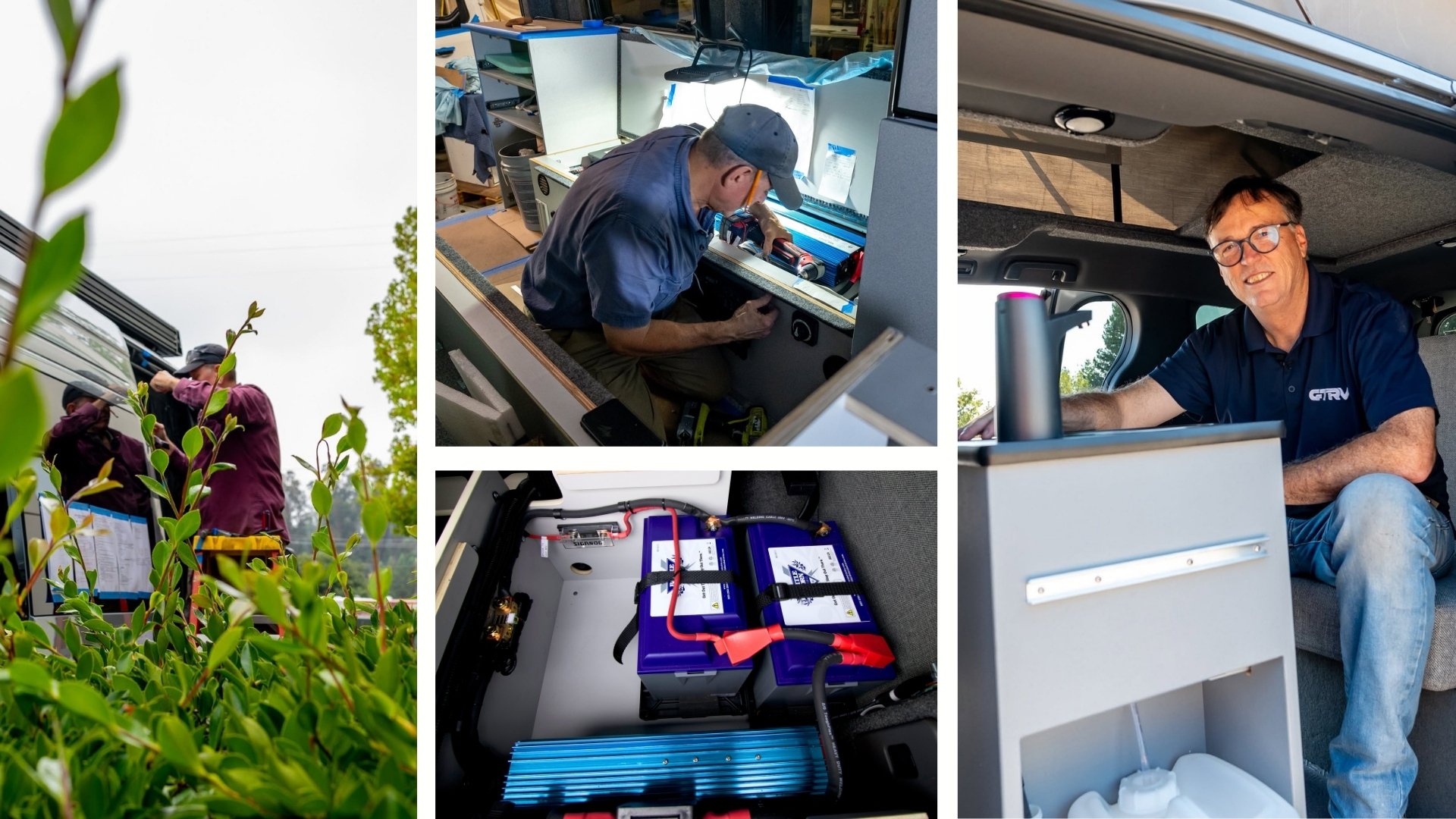
Electrical systems are the most common upgrade we see. The original system was sized for a certain kind of use, and then real life happened. Maybe weekend trips turned into two-week stretches. Maybe a new device (an induction cooktop, a CPAP machine, a portable AC unit) pushed the system past what it was designed for. Moving from AGM to lithium batteries, adding solar panels, or resizing the inverter are all projects we take on. The concepts are simple enough, but the execution matters. A poorly wired upgrade can create problems that are worse than what it was supposed to solve.
Ventilation tends to surface after people have spent time in their van during warmer months. A van that felt fine in May can be uncomfortable in August. Swapping a basic vent for a Maxxair fan, or adding a second fan to improve airflow through the cabin, makes a real difference. We recently installed a Maxxair Deluxe on a Sprinter for someone passing through Sebastopol on their way up the coast. They'd been living with a lower quality vent for two years and decided they were done with it.
Heating comes up seasonally. People who started traveling in the summer and then decided they wanted to extend into fall and winter often find that a proper heating system changes what's possible with the van. If the van is already set up with propane, we tend to go with Propex heaters. If not, we install Espar and Webasto units, which come in both gasoline and diesel versions depending on the vehicle. The right choice depends on what's already in the van and how the owner plans to use it.
Storage and layout changes are more varied and usually smaller in scope. Adding a slide-out drawer where a fixed shelf used to be. Reworking the kitchen area to fit a different cooktop or a larger fridge. Reconfiguring how the bed folds or stows. We recently installed L-track on a full build to give the owner proper attachment points for gear that didn't have a dedicated spot in the original layout. These are the upgrades that don't sound dramatic but get noticed every single day.
Plumbing and water systems come up, but less often than people expect. The most common request is actually a water pump replacement, which is maintenance, not an upgrade. We sometimes add a new or additional water tank under the van if it works with the existing system. What we don't do often is add a shower to a van that wasn't built with one. It sounds like a simple upgrade, but plumbing a shower into an existing build means reworking drainage, water routing, ventilation, and often the floor structure. It's technically doable but expensive enough that it's worth understanding the scope before committing.
When the Upgrade You Want Isn't the One You Need
Not every upgrade idea makes sense, and part of what we do is help people think through whether a change is going to work the way they expect.
The most common version of this is adding features to a van that was designed around simplicity. If the build was originally wired for a battery, a fan, and some LED lighting, and now the owner wants a full kitchen, a shower, and 400 watts of solar, that's less of an upgrade and more of a second build. It can be done, but the cost and complexity sometimes approach what a purpose-built conversion would have cost from the start. That's worth knowing before you commit to the project.
There's also the version where someone wants to upgrade a specific component, but the real issue is somewhere else in the system. A bigger battery doesn't help if the charging source can't keep up with it. A better fan doesn't solve a heat problem caused by poor insulation or dark-colored exterior panels baking in the sun. We try to look at the whole system before recommending individual changes, because the most useful answer isn't always the one someone came in with.
Vans We Didn't Build
A good portion of our upgrade and service work comes in on vans that weren't originally built by GTRV. Some are professional conversions from other shops. Some are DIY builds that got most of the way there and need a professional finish on specific systems. Some are older factory-built camper vans that the owner wants to modernize.
The process is the same regardless of who did the original work. We look at what's there, talk through what the owner wants, and figure out what makes sense. There are some practical differences depending on how the original build was done. Getting behind panels that were glued rather than screwed, for instance, adds time and cost. But most upgrade work is doable on any well-built van, regardless of where it came from.
If you bought a used GTRV conversion, we can help there too. We've had people reach out after buying a used van who wanted documentation on the build, replacement parts, a pre-purchase inspection, or just a general sense of where things stand. The builds hold up, but a van that's been on the road for five or ten years will have wear in predictable places, and it's worth knowing what to look at.
Sometimes the Smarter Move Is Maintenance
Sometimes what starts as talk about upgrades turns into something simpler. Seals wear out. Batteries reach the end of their life. Solar panels degrade over time. Pop-top canvas develops wear spots after years of use. Plumbing fittings corrode or develop leaks, especially on vans that are exposed to salt air or hard water.
A van that's starting to feel tired might not need new features. It might just need the things it already has working properly again. We see this with pop-tops that have gotten stiff, with electrical systems that behave erratically, and with water systems that have developed slow leaks. The fix is usually simpler and less expensive than the owner expects going in.
Your Van Evolves as You Use It
The builds we feel best about are the ones that still work well three, five, ten years in, even if a few things have changed along the way. A van that works well in year one and still works well in year five, even if a few things have changed along the way, is doing exactly what it was designed to do.
If you're thinking about changes to your van, whether we built it or someone else did, it starts the same way a new build does: how are you using it, what's working, and what could work better.
Reach Out
Whether you're thinking about a single upgrade or a full refresh, the conversation starts the same way.
If you're weighing options or just want to think out loud with someone who's been through it a bunch, we're happy to help.
Most of these conversations start the same way yours probably would: "Here's how I've been using it. Here's what I've learned. What upgrades will improve my experience?" That's the right place to start.
Call us at 888-332-9602 or send us a message here
Stay in the loop
Our newsletter is where we share what we're learning, thinking about, and building at the shop. Platform insights, practical advice, and the kind of detail that tends to matter more over time.
No hype. No spam. Just useful perspective from people who do this every day.
Subscribe to the GTRV newsletter
