
GTRV 4.0: What's Next for the Shop
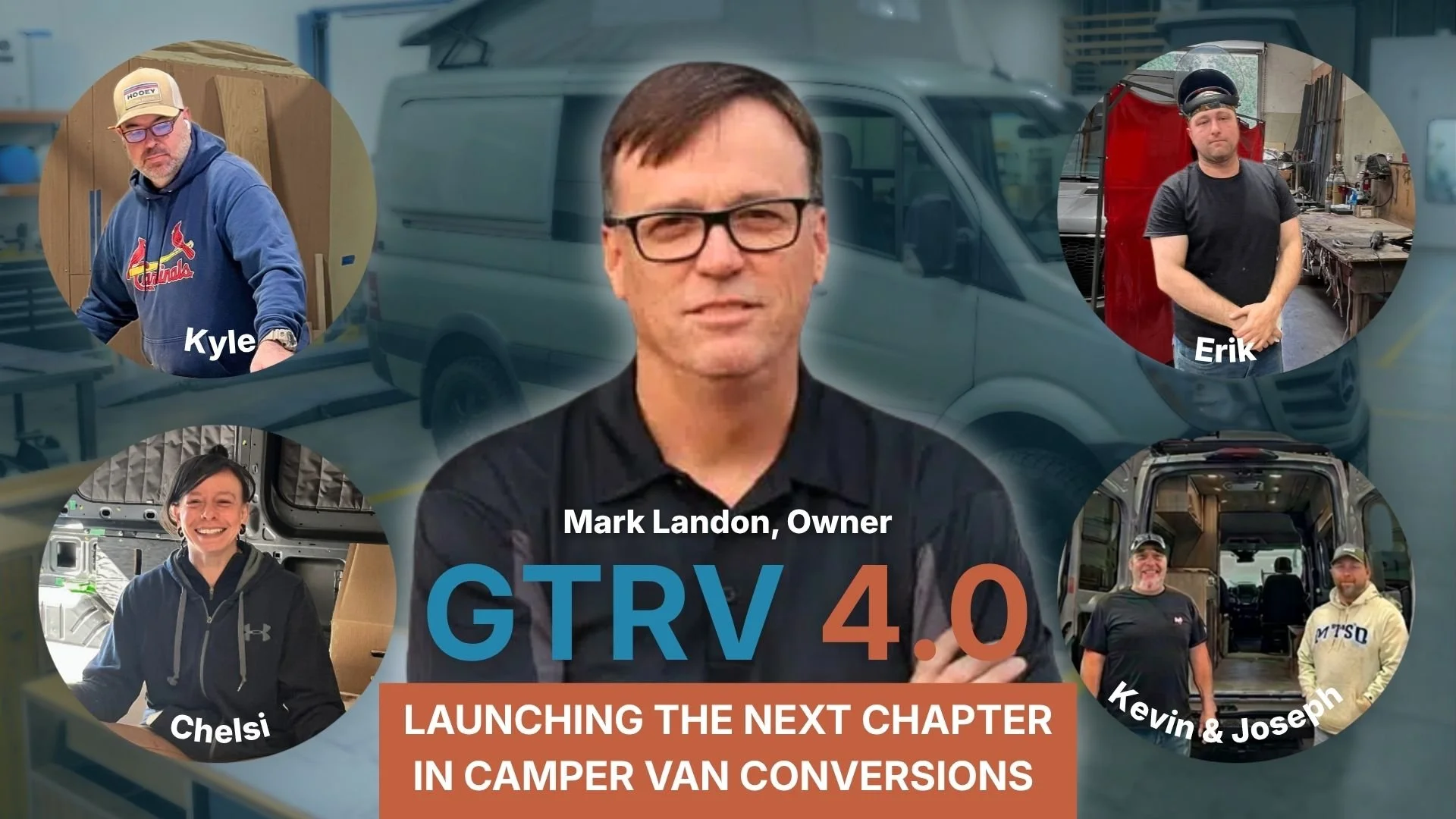
The Next Chapter
GTRV has been around since approximately 1994. The shop started in Richmond, BC, moved to Sebastopol in 2002, and I bought the business in 2018. Each of those transitions changed the company in some way, but the core of what we do stayed consistent: custom van conversions, built by hand, designed around how people actually travel.
People know us mainly for our pop-tops. That's fair. Pop-top conversions have been a big part of what we do for a long time, and we're proud of that work. But GTRV has always been more than just pop-tops. We also do full custom buildouts on multiple platforms. Pop-tops are a big part of the story, not the whole story.
Over the past couple of years, I've been thinking about what the natural next step is for a shop that's been doing this for three decades. The Mercedes Metris, which had been one of our highest-volume platforms, was discontinued. That was a big part of our business. So we started looking at what else we could offer. New platforms, new products, new ways to serve people who want to get on the road.
I've been calling it GTRV 4.0. It comes down to four pillars we believe in, and they're worth spelling out.
Pillar 1: Innovation
New platforms, new products, new ways to build
When I first took over, Mike Reed, the previous owner, bought an NV200 and basically gave it to me to work with. He wanted me to succeed, and he also didn't want to see a company he'd built for decades fail under new ownership. We shared the revenue on that first small van, and it surprised both of us how well it worked. People wanted a small, practical conversion, and there weren't many options out there.
That instinct turned out to be right. The NV200 brought in clients we wouldn't have reached otherwise. And when it was discontinued along with the Metris, the question became: what fills that gap?
The Ram ProMaster City is the answer. It's the first new small van platform to hit the US market in years, and every other small van has been canceled. We’ve been designing CAD layouts for conversion configurations before the vans are even available at dealers. We're taking deposits now for Q1 2027 builds.
Another piece is Intrepid Camp Gear. We kept hearing from people who wanted to get outside more but weren't ready for a full conversion. Maybe they weren't sure yet. Maybe the budget wasn't there. Instead of just pointing them somewhere else, we became the only authorized Intrepid dealer in Northern California, carrying the full GEO series of rooftop tents and their entire product line. We also take care of the installation, so the customer doesn't have to figure out rack compatibility or load ratings on their own.
And then there's the technology inside the vans themselves. The electrical systems we're building today look nothing like what we were installing five or ten years ago. Electronics have changed tremendously. Solar panels are more efficient. Battery technology has changed primarily to Lithium, and capacity has jumped. LED lighting changed what's possible with interior lighting design and power consumption. We've spent years dialing in specific component combinations (battery monitors, charging systems, inverters) that work well together and keep costs reasonable, and value high for our customers.
Innovation at GTRV doesn't mean chasing trends. It means paying attention to what people are asking for and figuring out whether we can do it well. If the answer is yes, we find a way.
Pillar 2: Adaptability
The customers’ needs haven't changed. Everything else has.
What customers want from a camper van hasn't really changed in the years I've been doing this. People want to get on the road and camp. They want a van that's reliable, practical, and comfortable enough to sleep in. That part is remarkably consistent.
What has changed is everything around it. The technology has changed. The platforms have changed. Somebody wants Starlink. Somebody else wants drawers instead of a pantry. One customer needs a shower that works out the back door. Another has a very specific idea about where the electrical panel should go and why.
Every one of those conversations is different, and that's the part of the work I enjoy most. We do have standard packages for our Westy, Weekender, and pop-top conversions. But those are starting points, not limits. Every build starts with a conversation about how that specific person plans to use the van, and the design adapts from there.
A lot of companies in this space will tell you they do custom work. And to be fair, some of them do. But there's a difference between picking from a standard, defined list of upgrades and sitting down with someone, understanding how they actually live and travel, and designing a layout that reflects those specifics.
We are willing to customize even within our own standard product line. That's the real differentiator. Not the platforms we work on or the tools in the shop, but the willingness to start from what each person actually needs and build from there.
That's always been true at GTRV, and 4.0 doesn't change it. If anything, the willingness to adapt is what makes everything else possible.
Pillar 3: Craftsmanship
The quality is the one thing I would never change
Everything else about the business can evolve. The platforms, the products, the scope of what we offer. But the standard of work coming out of this shop stays where it is.
When I think about craftsmanship at GTRV, the first thing that comes to mind is the cabinetry. Quality materials, quality joinery, and reliability that holds up over years on the road. We build our own cabinets in-house on our CNC machine. We draw every layout in CAD. Nothing is off the shelf, and nothing is a guess.
But craftsmanship also shows up in the decisions people don't see. Sometimes one of the technicians will look at a piece that didn't come together right and say, "I can fix this by doing X." And sometimes the fix would technically work, but it's not the right way to do it. Especially on a Westy or a build where the customer is expecting a specific product. If you have to rebuild the piece, you rebuild it. There's no shortcut that's worth the compromise.
Every build teaches us something. A customer comes in with a specific set of needs, and sometimes meeting those needs means figuring out a new approach. The best part is that those improvements carry forward. What we learn on one project makes the next one better.
That standard applies whether it's a full custom conversion or a pop-top installation, a large van or a small one. The scope of what we offer has gotten wider. The care that goes into each job hasn't changed.
Pillar 4: Community
Hundreds of GTRV vans on the road, and counting
GTRV has been building vans since 1994 (approx.). That means there are hundreds of our builds out on the road right now. Some have been running for over twenty-five years. The people who own them are connected by something, even if most of them have never met each other.
That's a community. It's grown organically over time. One customer, one van at a time.
We've started leaning into that more intentionally. GTRV has hosted gatherings at the shop going back years, and we keep doing them. No sales pitch, no presentations. Just owners bringing their vans, checking out each other's builds, and talking about where they've been and what they've learned. No sales pitch, no presentations. Just owners bringing their vans, checking out each other's builds, and talking about where they've been and what they've learned. One long-time customer brought his custom Sprinter and pizza oven. That's the kind of event it was.
We've always had customers come back. For upgrades, for service, sometimes just to show us where the van has been. People who bought conversions from previous eras still reach out. The fact that the work holds up over time, that these vans are still on the road a decade or two later, tells you a lot about what we build and the people who choose it.
What's Ahead
GTRV 4.0 is the name I've been using for the direction I see the shop heading. But when I step back and look at it, these four pillars aren't really new. They're just a clearer way of describing what we've been building toward since I took over: a shop that innovates without losing its identity, adapts to what people need, never compromises on the quality of the work, and takes care of the community that grows around it.
The core hasn't changed. We still build custom vans in Sebastopol, the same way we always have. What's different is the scope of what we can offer and who we can serve. More platforms, more products, more ways for people to get on the road in a van we're proud to put our name on.
If you're reading this on our new website, that's part of 4.0 too. We rebuilt it from the ground up to better reflect where the shop is now and where it's going.
Reach Out
Whether you're ready for a full conversion, curious about the ProMaster City, interested in a rooftop tent, or just want to talk through your options, we'd like to hear from you.
Most of these conversations start the same way yours probably would: 'Here's how I want to use it. What makes sense?' That's the right place to start.
Call us at 888-332-9602 or send us a message here
Stay in the loop
Our newsletter is where we share what we're learning, thinking about, and building at the shop. Platform insights, practical advice, and the kind of detail that tends to matter more over time.
No hype. No spam. Just useful perspective from people who do this every day.
Subscribe to the GTRV newsletter
If you're still in research mode, these are good next steps:
The Metris Is Gone. Meet the ProMaster City
The ProMaster City Camper Van: Designing Conversions Before It Arrives
