
A Gap in the Lineup
If you've been searching for a Mercedes Metris camper van conversion lately, you already know the situation. Mercedes stopped selling the Metris in the U.S. in 2024. The vans that are left are used, and they go fast. Some conversion shops still have a few in stock, but the supply is drying up.
The Metris wasn't for everyone. But for the people who wanted one, nothing else quite filled the role. Smaller than a Transit or Sprinter. Low enough to park in a garage. Big enough to sleep in, cook in, and actually live out of for a week. If you valued a compact footprint over maximum interior space, the Metris was the van.
And it wasn't just the Metris. Every small cargo van sold in the U.S. has been cancelled in the past few years. The Ford Transit Connect, the Nissan NV200, the Chevy City Express, the old Ram ProMaster City. By 2024, the entire segment was gone. If you wanted a smaller van, there was nothing new to buy.
So what now?
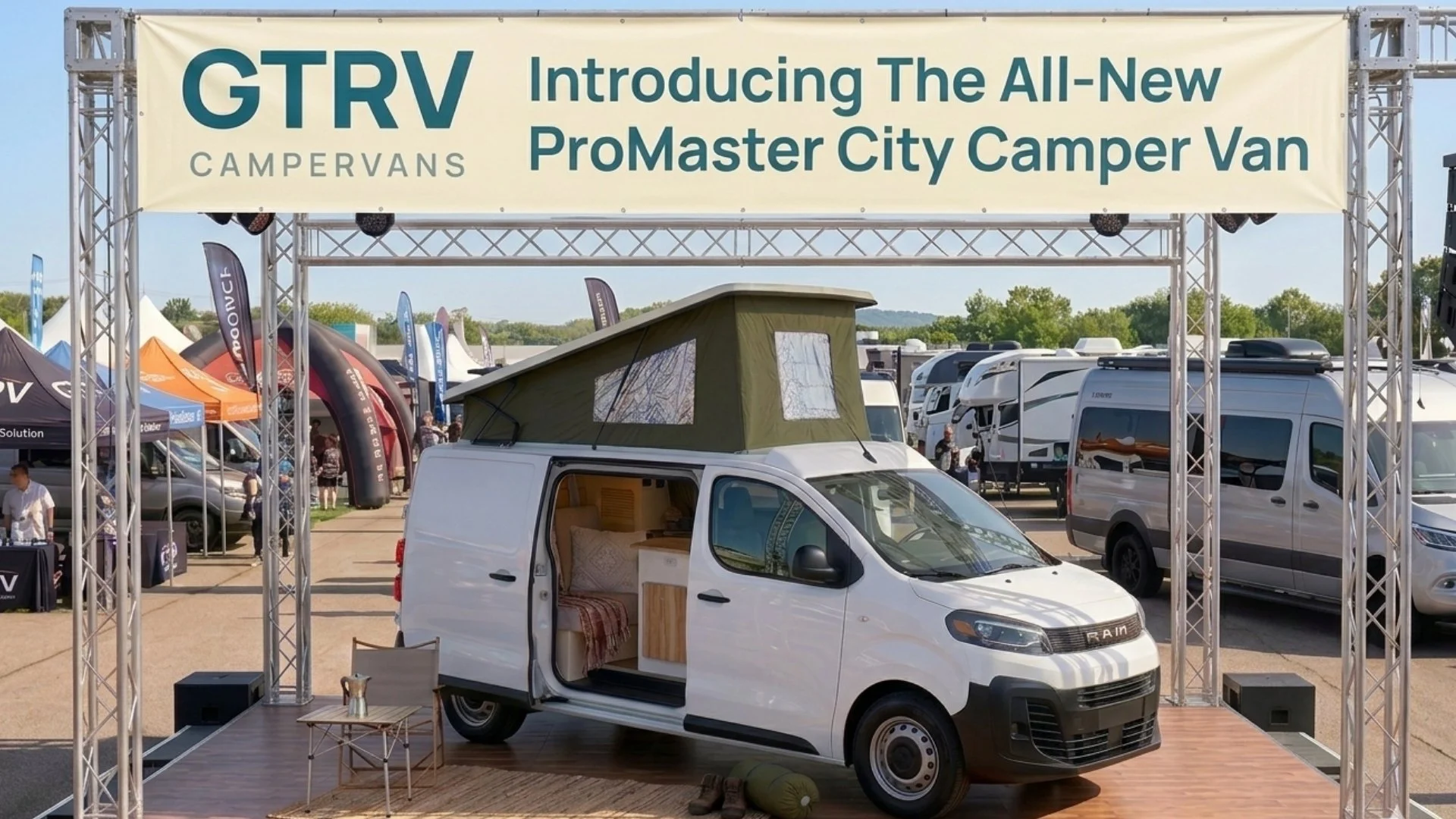
Introducing The 2027 Ram ProMaster City
Ram is bringing back the ProMaster City nameplate, and the new version is a substantially different vehicle from the old one. It arrives at dealerships in early 2027 and will be the only midsize commercial van sold in the United States.
A few numbers worth knowing:
Overall height: under 77 inches. That's garage-friendly. If you're someone who needs the van to fit under a standard residential garage door, this clears it.
Load floor: 111 inches. That's over nine feet of usable length in the cargo area.
Cargo volume: 167 cubic feet. With more than 48 inches between the rear wheel wells and about 54 inches of cargo height. For context, the old ProMaster City had roughly 131 cubic feet. The Metris cargo van offered about 183 cubic feet, so the ProMaster City lands between the two. It's a different shape, though, with a longer, narrower cargo area and a lower overall height.
Under $40,000 base price. Ram hasn't published exact numbers yet, but they've been clear about keeping it under that threshold.
The platform underneath is already proven. It's the same architecture that Citroen, Peugeot, Fiat, and Toyota have been selling in Europe for years under different names (Dispatch, Expert, Scudo, ProAce).
European conversion companies have been building campers on it. Pop-top conversions on this platform already exist overseas. The track record is there. It's just arriving here under a new badge.
Why This Van Fills the Metris Gap
The Metris had a specific appeal. It was a van that could do double duty. Drive it to work on Monday. Drive it to a campsite on Friday. Park it in the garage when you get home. You didn't need to own a second vehicle or rent a parking spot for something that only comes out on weekends.
The ProMaster City fits that same description. Under 77 inches tall. Manageable in city traffic. Room for a real conversion inside. It's not identical to the Metris (it's actually bigger in most dimensions), but it occupies the same space in someone's life.
That said, the van itself is only part of the equation. How it gets built out matters just as much.
What to Think About When Choosing a Builder
When a new platform arrives, shops approach it in different ways. Some design a set of fixed configurations, build tooling around those layouts, and produce them efficiently. That model works well if one of those configurations fits what you need. You know what you're getting, the shop knows how to build it, and the process moves quickly.
But smaller vans create a different design challenge than larger ones. Every inch matters more. The galley has to be tighter. The bed might need to serve double duty as a seating area. Storage gets creative out of necessity. And the things that make a layout work for one person (where the cooktop goes, how the electrical is routed, whether there's room for a dog crate or a surfboard or a specific piece of gear) often don't line up neatly with a fixed floor plan.
What Customization Actually Looks Like
Most people don't walk in expecting to customize their van. They assume there's a standard build and they either take it or leave it. So it's worth explaining what's actually on the table.
Customization usually falls into three areas.
Aesthetics. The laminate on the cabinetry (solid colors, patterns, wood grains), the upholstery, the overall look and feel of the interior. This is the most visible layer and it's where most people start. Two vans with the same layout can feel completely different depending on the materials.
Function. This is where the options list gets interesting. Increased lithium battery storage, solar panels, inverter systems, the types and locations of electrical outlets, heating, ventilation, lighting. Each of these is a decision that connects to how you actually plan to use the van: how long you stay out, where you camp, what you need to power.
Budget. We generally spec premium equipment because it lasts. But there are choices. A less expensive battery option. A different painting approach for the pop-top. The goal isn't to push the most expensive build. It's to find the right balance for your situation.
Those three layers give you a lot of room to make a van yours. But the customization that matters most in a smaller van goes deeper than options and finishes. It's about layout.
In a bigger van, there's margin for error. If a cabinet is a few inches wider than it needs to be, you probably won't notice. In a van this size, those inches are the difference between a layout that flows and one that frustrates you every time you open a drawer.
(If you haven't read The 80/20 Rule of Van Design, that post gets into why building around what you actually use matters more than checking every box.)
We've seen this play out in real builds. A couple doing a Transit Westy conversion wanted drawers where the pantry and porta-potti space would normally go. They also wanted the cabinet shortened slightly so the driver could push the seat back further. Both requests connected to the same thing: how they actually move through the van day to day. We handled both changes in the same modification.
On a current NV200 Westy build, the customer wanted a walkway from the front of the van to the back, next to the cabinet. To make that work, we reduced the width of the bed. That's not a decision you'd find on an options list. It came from a conversation about how this person uses the van, and the layout shifted to match.
Other customers have asked for specific electrical outlets (110VAC or 12VDC) in places most shops wouldn't think to put them: at the countertop, near the slider door, at a particular height. They had a reason for each one. USB outlets at specific locations is a common request too. These aren't big changes individually, but they add up to a van that works the way you need it to instead of the way someone else designed it to.
That kind of flexibility comes from building cabinets in-house rather than installing kits. It's an operational detail that doesn't show up on a spec sheet, but it's the difference between a van that mostly works and one that actually fits.
What We're Doing About It
We've been watching this platform since Ram announced it. The K0 architecture (that's the internal name for the platform family) has been on European roads for years, and we've been studying how overseas converters have approached it. The cargo dimensions, the door openings, the roof geometry. Design work is already underway.
We don't have a van in the shop yet. Nobody in the U.S. does. But we're not starting from scratch when it arrives. We're working from known dimensions, proven platform geometry, and a clear picture of what this van can do.
This is the first of three posts on the ProMaster City.
Next up: what the design and deposit process looks like, and what a conversion on this platform actually costs.
Want to talk it through?
Susan came to us knowing exactly how she wanted to use her van. Not everyone does, and that's fine too.
Most of these conversations start the same way: here's how I travel, here's what I need, what makes sense?
If you're asking yourself the same kinds of questions, we're happy to think it through with you.
Call us at 888-332-9602 or send us a message here
Stay in the loop
Our newsletter is where we share what we're learning, thinking about, and building at the shop. Platform insights, practical advice, and the kind of detail that tends to matter more over time.
No hype. No spam. Just useful perspective from people who do this every day.
Subscribe to the GTRV newsletter
If you're still in research mode, these are good next steps:
A First-Time Buyer's Guide to Camper Vans
