
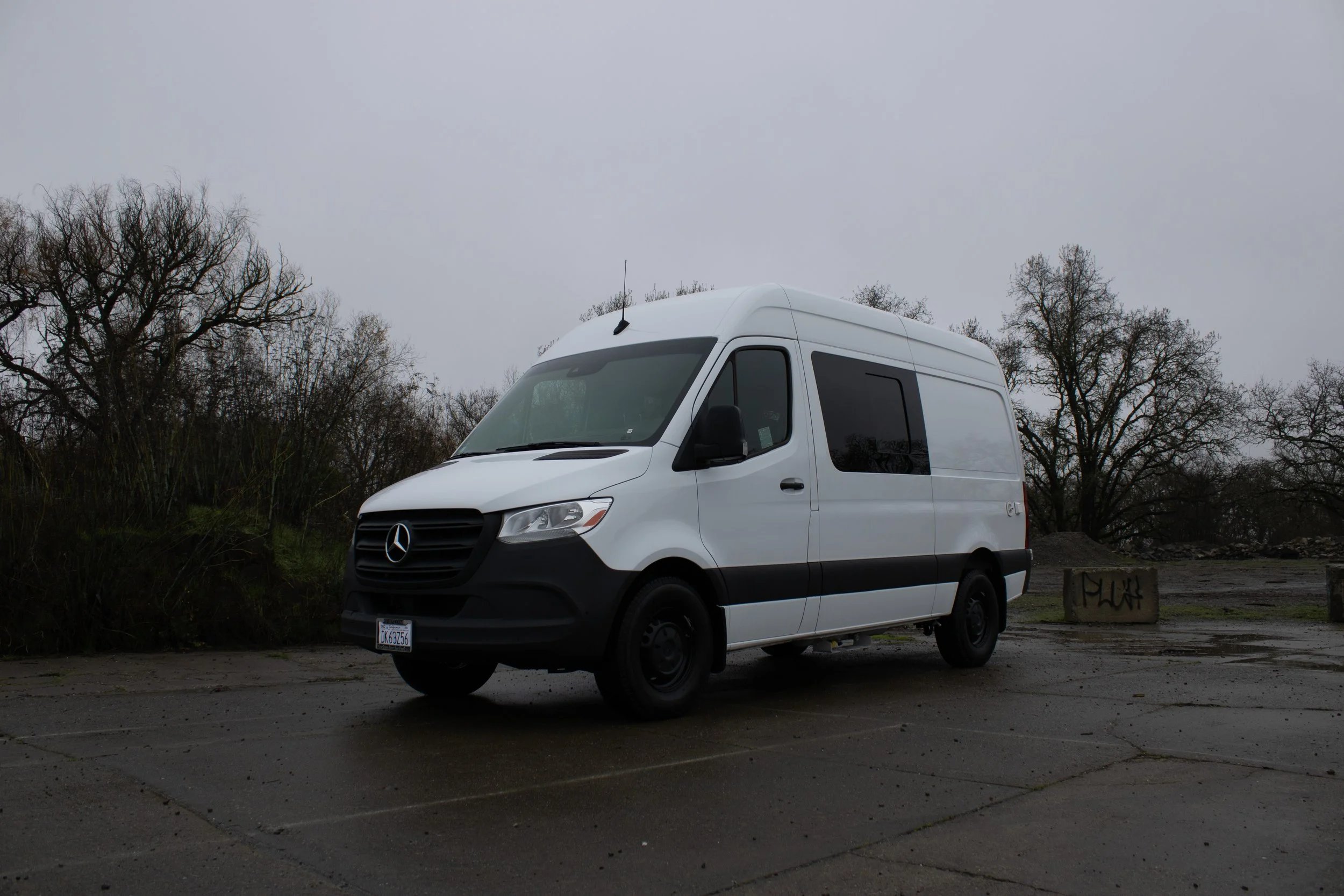
Mercedes Sprinter
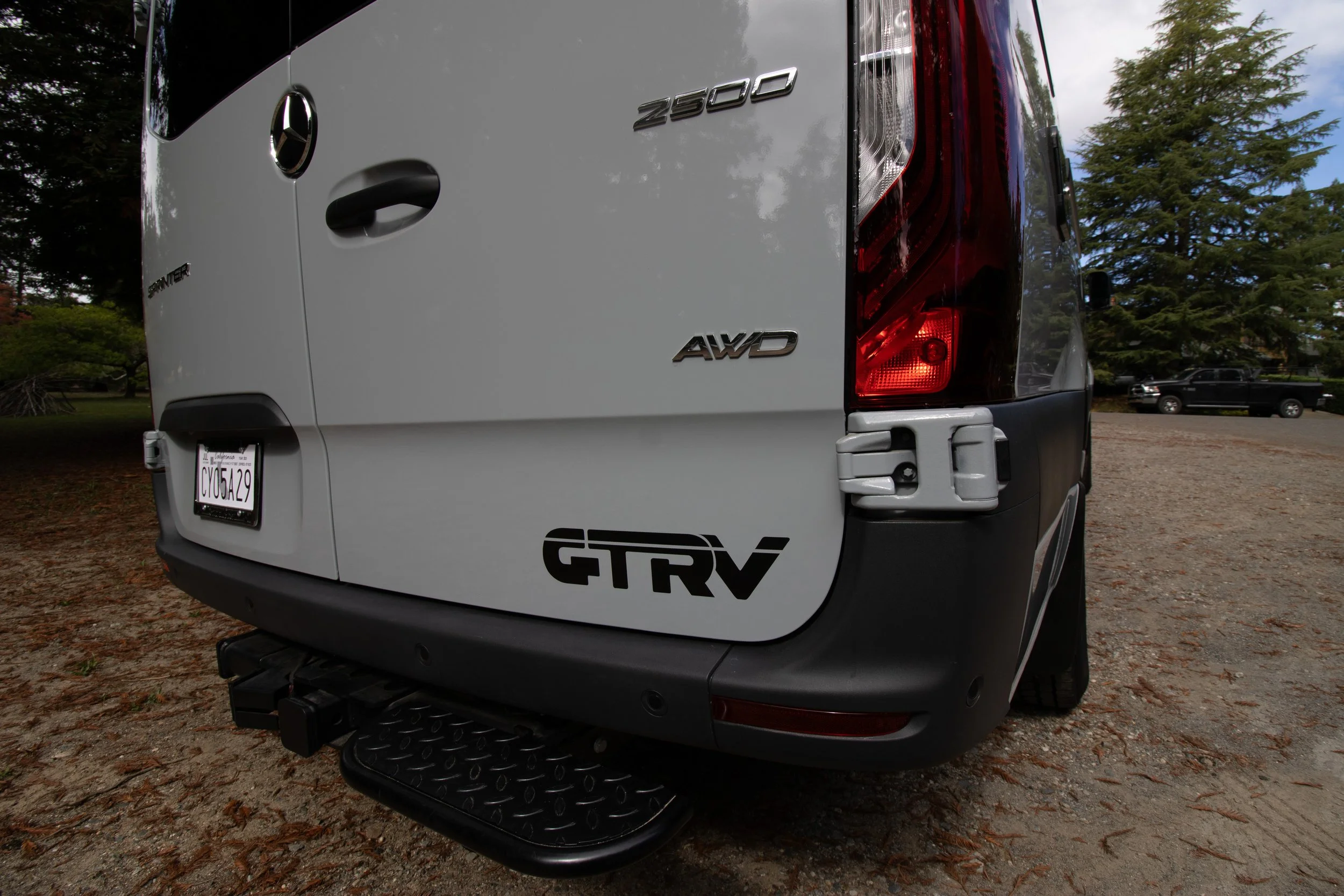
The benchmark platform. Diesel, AWD available, built for the long haul.
Why This Platform
The Sprinter has been the benchmark van conversion platform for a long time, and for good reason. Diesel efficiency means lower fuel costs on long trips. AWD is available for people who want off-pavement capability. The build quality and driving dynamics are a step above most competitors. And Sprinter conversions hold their resale value better than almost any other platform.
If you're planning extended trips, full-time travel, or a higher-complexity build (off-grid electrical, full kitchen, possibly a wet bath), the Sprinter handles that scope well. The platform was designed for commercial use and long service life, and that durability carries over to conversion work.
The tradeoff is cost, and it's not a small one. A Sprinter costs more to buy than a Transit or ProMaster. Parts are more expensive. Service has to go through a Mercedes dealer or a specialist, and labor rates are higher. If something breaks on the road, the fix will cost more and may take longer to source than it would on a Ford.
For some people, that premium is worth it. The diesel fuel savings add up over tens of thousands of miles. The driving feel is noticeably better on long highway stretches. The AWD system is capable and well-integrated. And the brand carries weight at resale.
For others, the Transit offers similar capability at a lower total cost of ownership. If your budget is a primary constraint, or if your trips are mostly weekends rather than extended travel, the Transit is worth a serious look before committing to the Sprinter premium. We build on both platforms, and we'd rather help you make the right choice than sell you the more expensive option.
If you're comparing across all four platforms, Which Camper Van Is Right for You? covers the full picture.
What We Build on It
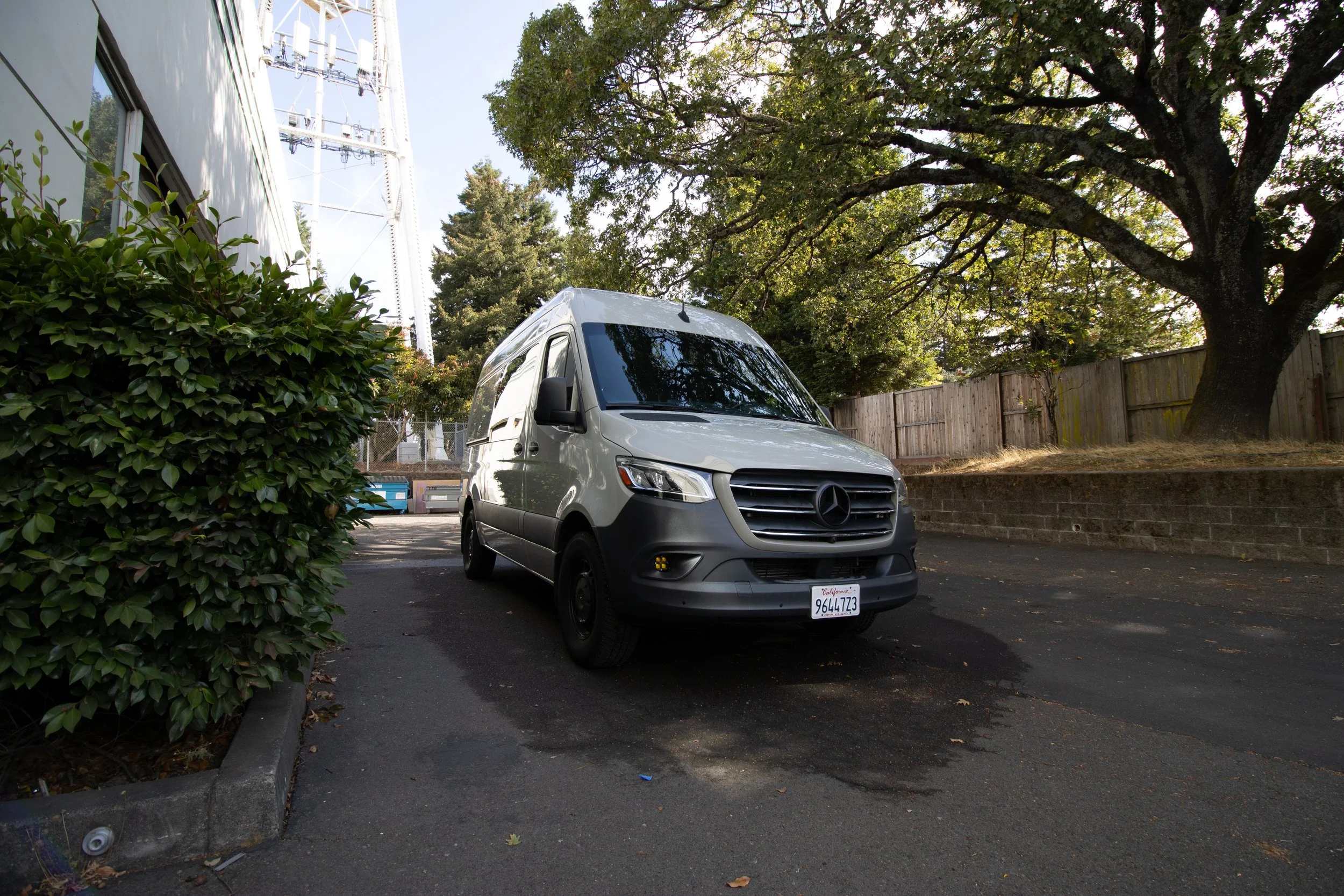
The Sprinter tends to attract people planning more comprehensive builds. The platform supports higher complexity, and the owners who choose it are often thinking about longer trips and more self-sufficient setups. We work on all Sprinter configurations, though the 144-inch wheelbase high-roof model is the most common starting point for conversions.
Pop-top only
Yes, we install pop-tops on the Sprinter. A pop-top on a standard-roof Sprinter gives you the standing height and sleeping space up top while keeping a slightly lower profile than the high-roof model.
Weekender
Build
Pop-top with a basic interior package: sleeping platform, storage, and seating. A good option for Sprinter owners who want a capable setup without a full kitchen and electrical system.
Full Westy
Conversion
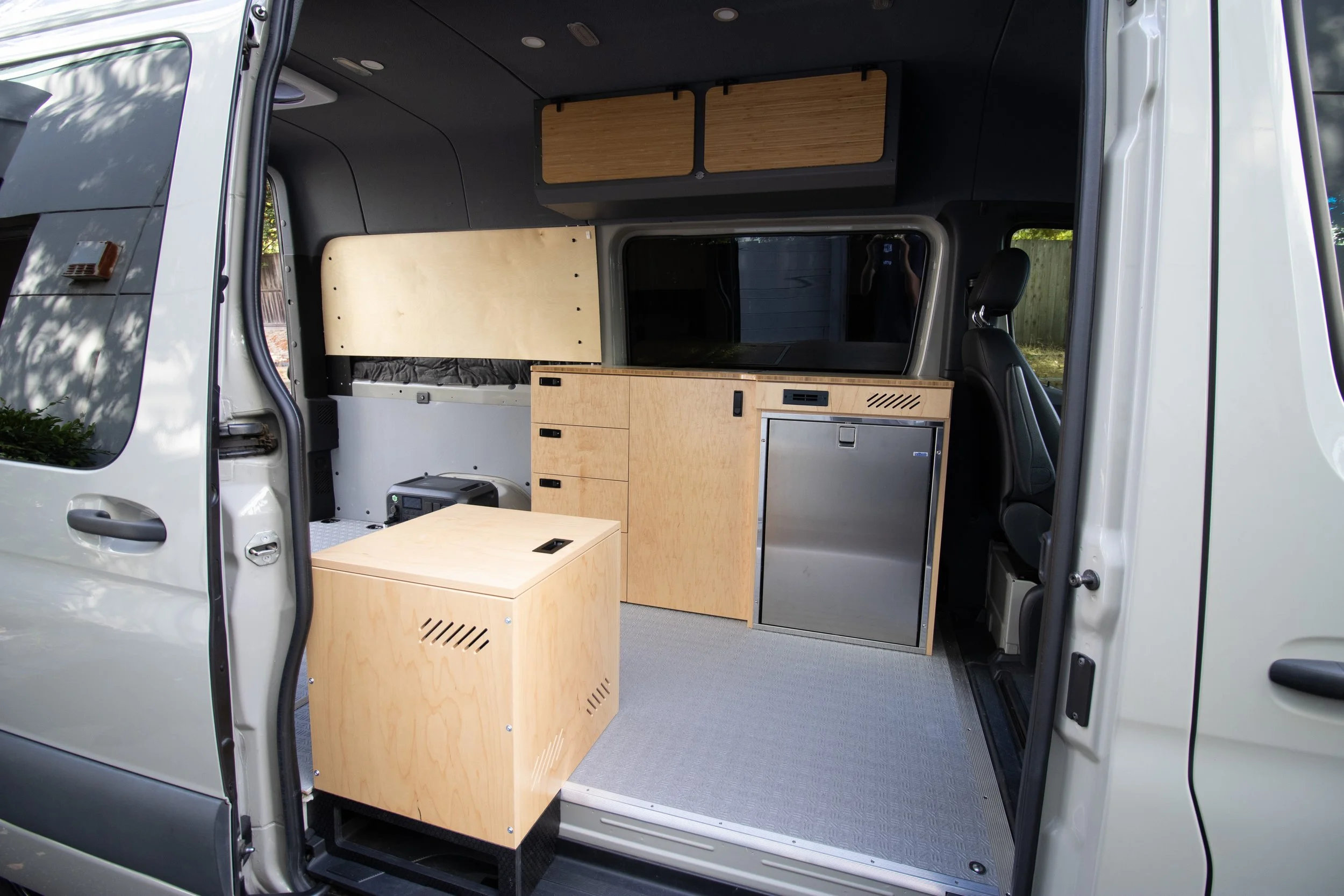
The classic layout adapted for the Sprinter's dimensions: pop-top or high roof, rear bed, kitchen, storage, electrical, and the kind of interior finish that takes advantage of the Sprinter's quality. The 144-inch wheelbase high roof is the most popular configuration for this build. The 170-inch wheelbase makes a nice conversion too, but it's a big vehicle.
Custom
Builds
Off-grid electrical systems, full kitchen setups, specific storage solutions, layouts designed around particular travel patterns. The Sprinter's payload capacity and interior dimensions support builds that would be tight on smaller platforms. We've also done conversions on the 144 low-roof Sprinter, which is less common but makes a nice, more compact build.
Specs That Matter
Spec
Detail
Approximately 96 inches (8 feet)
Exterior height (standard roof)
Approximately 107 inches (8 feet 11 inches)
Exterior height (high roof)
Adds approximately 4 inches to the stock roof height
Pop-top addition
RWD standard, AWD available
Drivetrain
Diesel (standard across all Sprinter models)
Engine
Ready to talk about a Sprinter build?
The Sprinter is a serious investment, and it's worth having a real conversation about whether it's the right platform for your plans. We build on four platforms and we'll give you an honest assessment of whether the Sprinter premium makes sense for your situation. Sometimes it does. Sometimes the Transit gets you where you need to be at a lower cost.
Call us at (888) 332-9602 or send us a message.
Not sure where to start? Our Start Here guide takes about three minutes and helps us understand what you're looking for.
Get in Touch | (888) 332-9602

Stay in the Loop
We send a newsletter every few weeks with what we're building, what we're learning, and what's worth knowing before you make a decision. No hype. Useful stuff.
FAQs
-
It depends on how you plan to use it. If you're doing extended trips, full-timing, or putting on a lot of highway miles, the Sprinter's diesel efficiency, driving quality, and AWD capability can justify the higher purchase and maintenance costs over time. If your trips are mostly weekends and shorter road trips, the Transit gives you similar interior space and conversion options at a lower total cost.
We build on both platforms, and the honest answer for many people is that the Transit delivers most of the capability at a meaningfully lower price. The best way to figure out which is right for you is to talk through your travel plans with us.
-
Sprinter maintenance costs more than a Transit or ProMaster. Service typically goes through a Mercedes dealer or diesel specialist, and labor rates are higher. Parts cost more and can take longer to source, especially on the road. Diesel-specific maintenance (DEF system, fuel filters, injector service) adds to the schedule. None of this is a reason not to buy a Sprinter, but it's worth factoring into your total budget from the start.
-
The most common configuration is the 144-inch wheelbase high-roof model. The high roof gives you standing height without a pop-top, and the 144-inch wheelbase provides enough interior length for a bed, kitchen, and storage without making the van unwieldy.
We also do conversions on the 144 low-roof (less common, but a nice compact build) and the 170-inch wheelbase (more space, but it's a big vehicle). AWD is popular on Sprinter conversions but adds cost. If you're not sure which configuration to buy, start the conversation before you go to the dealer. We can help you choose the right Sprinter for the build you're planning.