
Your van is parked anyway
Unless it's your daily driver, your van probably doesn't move much between now and February. It sits in the driveway or in storage, and you get on with the holidays and everything else that fills up the winter.
Then the weather turns, you take it out for the first trip of the year, and that's when the list starts. You're not sure what shape the water system is in, so you end up drinking from bottles all weekend. Or something broke on a trip last summer, you got by without it, parked the van when you got home, and forgot about it until now.
That's the pattern we see. People call us in the spring, once they're using the van again and running into the things they meant to deal with. It's also when the shop is busiest and has the least room. Winter is the opposite. The van isn't being missed, and we have more room in the schedule to take care of it.
Start with your last trip
The easiest way to figure out what your van needs is to think back to the last time you were out in it. What did you work around? Maybe there weren't enough places to charge things and you were passing one cable around. Maybe the batteries didn't hold enough charge to keep the fridge running through the second day. Maybe the exhaust fan or the heater stopped working and you made do.
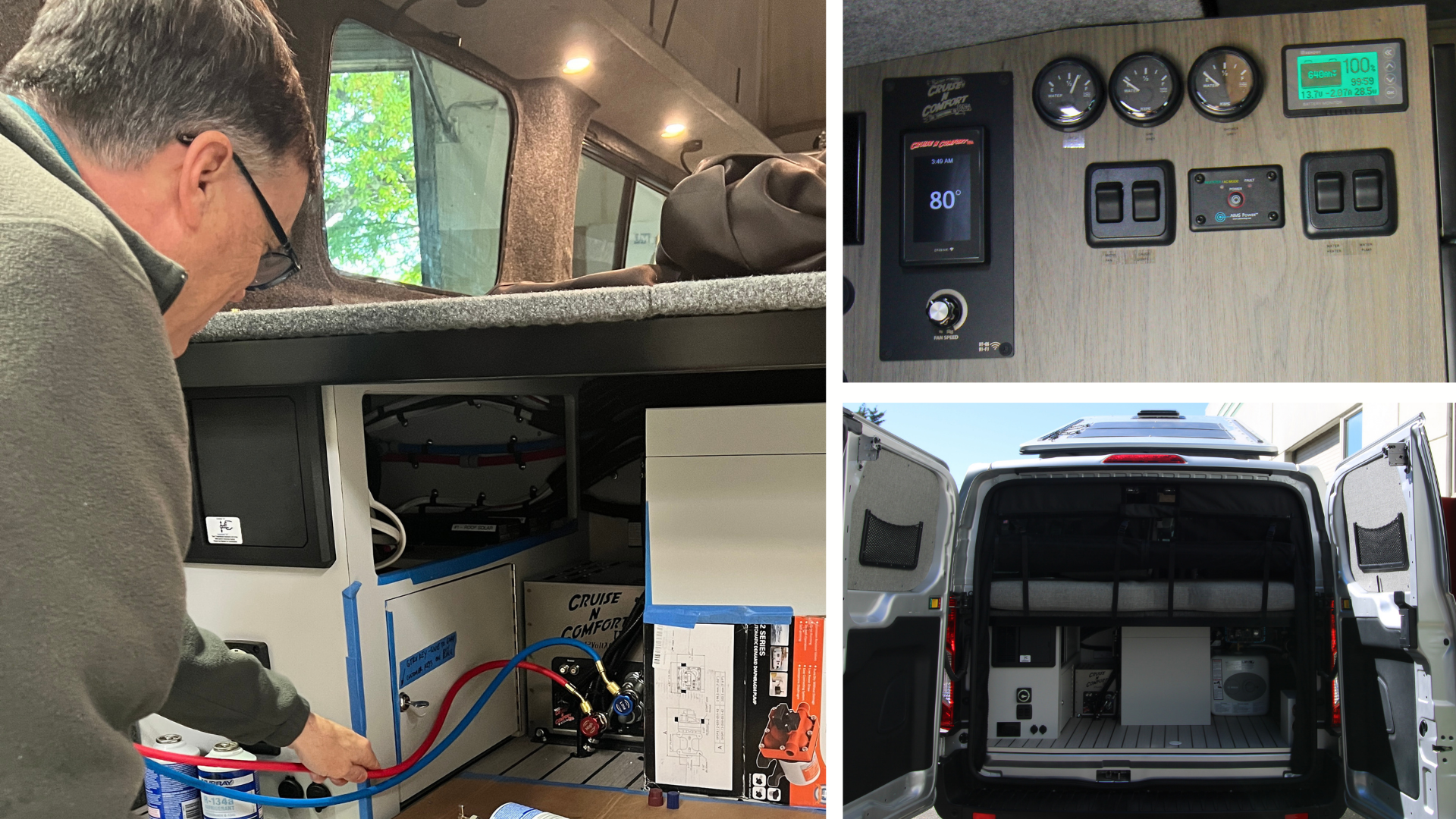
Our vans are fairly simple. There's an electrical system, a water system, and sometimes propane, and most of what comes up lives in one of those three. Very little of it needs regular maintenance. Most of the work we do on existing vans is upgrades, and the occasional repair for something that broke on the road.
Batteries are where we'd start
As I mentioned we switched to lithium batteries about five years ago. That means the AGM batteries we installed before then are likely reaching the end of their life now, and the same is true for a lot of vans built around that time.
Lead-acid batteries don't give much warning. The main thing you'll notice is that a charge doesn't last as long as it used to. If the fridge used to run for two days on the batteries and now it's done after one, that's the battery wearing out. Eventually they just stop holding a charge. They worked yesterday, and today they don't.
Going to lithium is the upgrade owners notice most. You get more usable capacity, the batteries charge faster, they are lighter, and they last longer. Prices have come down a long way since we started installing them. In most vans it's about two days in the shop.
If you have solar, have a look at that too. Panels lose some output as they age, so if you're not getting the charge you used to on a sunny day, that may be part of it. You would be amazed at how much better a solar panel works compared to one that is 5 five years old.
One thing to know about lithium: it won't charge below freezing. The battery's built-in controls shut charging off when it's too cold, which protects the battery, but it means you can't top it up on a cold morning in the snow. Self-heating lithium batteries get around this, and so does a battery blanket heater. We added a blanket for an owner who takes his van up to Tahoe in the middle of winter, and his batteries charge fine there now.
If last summer was hot
Air conditioning comes up more after a hot summer. We can add it to many vans (we don't put them on pop-tops). An AC unit draws a lot of power, so we'll look at your whole electrical system first to see whether it can keep up or needs to be expanded.
The unit we like has an eco mode that draws somewhere between 19 and 25 amps. With a good bank of lithium batteries, that will run for a while. How well it works for you comes down to how you use the van. Before we install one, we'll ask a few questions:
Are you usually plugged in to shore power? A lot of people only run their AC when they're plugged in.
Do you park in one place for a week at a time, or move most days? If you drive most days, the batteries recharge as you go, and you may not need as many.
How do you use the van in general? The answers decide whether your current system can handle it or needs more battery or solar to go with it.
Smaller things to look at while it's here
Roof fans. They wear out. If yours is noisy or has stopped working, it's an easy replacement.
Heaters. Most of the heaters we install run on propane, and they tend to work year after year without attention. Diesel heaters like the Espar need to be serviced every year or two, depending on how much you use them.
Pop-top gaskets. Have these checked. We replace them when there's a problem, not on a schedule.
Water. Depending on where you keep the van, you may want to winterize the water system. Either way, a thorough clean at the start of the season is a good habit.
If it's staying parked
If the van is going to sit for the winter and you're not bringing it in, a few things will help:
Turn off the main power switch. It disconnects the batteries from anything that might slowly drain them while the van sits.
Keep the batteries around 80%. Batteries don't like sitting full for months, and they don't like sitting empty. They'll slowly lose charge even when they're disconnected, so plug in now and then to top them up. Don't leave the van plugged in the whole time. If your solar panels are under a cover, they won't be charging anything, so this matters more.
Clean out the fridge and leave the door cracked open.
Empty the toilet.
Dry the pop-top canvas if you packed it up wet. It happens on a dewy morning when you need to get going. Open it back up and let it dry out as soon as you're home. Up or down for storage doesn't matter much once it's dry.
Getting it to us
Most of these jobs start with a phone call. We'll ask what you have in mind, and if a few pictures would help us figure out the next step, we'll let you know. For bigger changes like adding air conditioning, we'll want to see the van in person, and we inspect small jobs for free when we quote them.
If you're out of the area, shipping a van here for an upgrade can cost about as much as the work itself. What works better is planning it around a trip you're already making. We recently had a couple from Montana do exactly that. They were coming down for a wedding, and they dropped the van off while they were here.
For work we don't do, like engine, brake, or body repairs, we're happy to recommend local shops.
Reach Out
If something came up on your last trip, or your batteries are getting on in years, winter is a good time to take care of it. We're happy to talk it through with you.
Most of these conversations start the same way yours probably would: "Here's how I want to use it. What makes sense?" That's the right place to start.
Call Joseph at 888-332-9602 or send us a message here and he’ll get back to you.
Stay in the loop
Our newsletter is where we share what we're learning, thinking about, and building at the shop. Platform insights, practical advice, and the kind of detail that tends to matter more over time.
No hype. No spam. Just useful perspective from people who do this every day.
Subscribe to the GTRV newsletter
If you're still in research mode, these are good next steps:
We Do Upgrades and Service Too
