
What "Custom" Looked Like on This Build (Part 1)
What Custom Means When You Start From Scratch
If you've been comparing conversion shops, you've probably noticed that nearly all of them describe their work as custom. The word covers a lot of ground. For some builders it means picking a layout, an appliance package, and an upholstery color. For a full conversion at GTRV, we take the word "custom" literally. And that means learning how our customers actually plan to use their van. Then we work backwards from there and design their van the way they want it.
This kind of build runs on communication, and that communication starts earlier than people tend to expect. Before anyone talks about layouts or materials, someone has to listen to what you want, and before that, someone has to get back to you. Joseph, our Customer Experience Manager, has had more than one client tell him they chose GTRV because they got prompt answers to their questions, starting with the very first call or email.
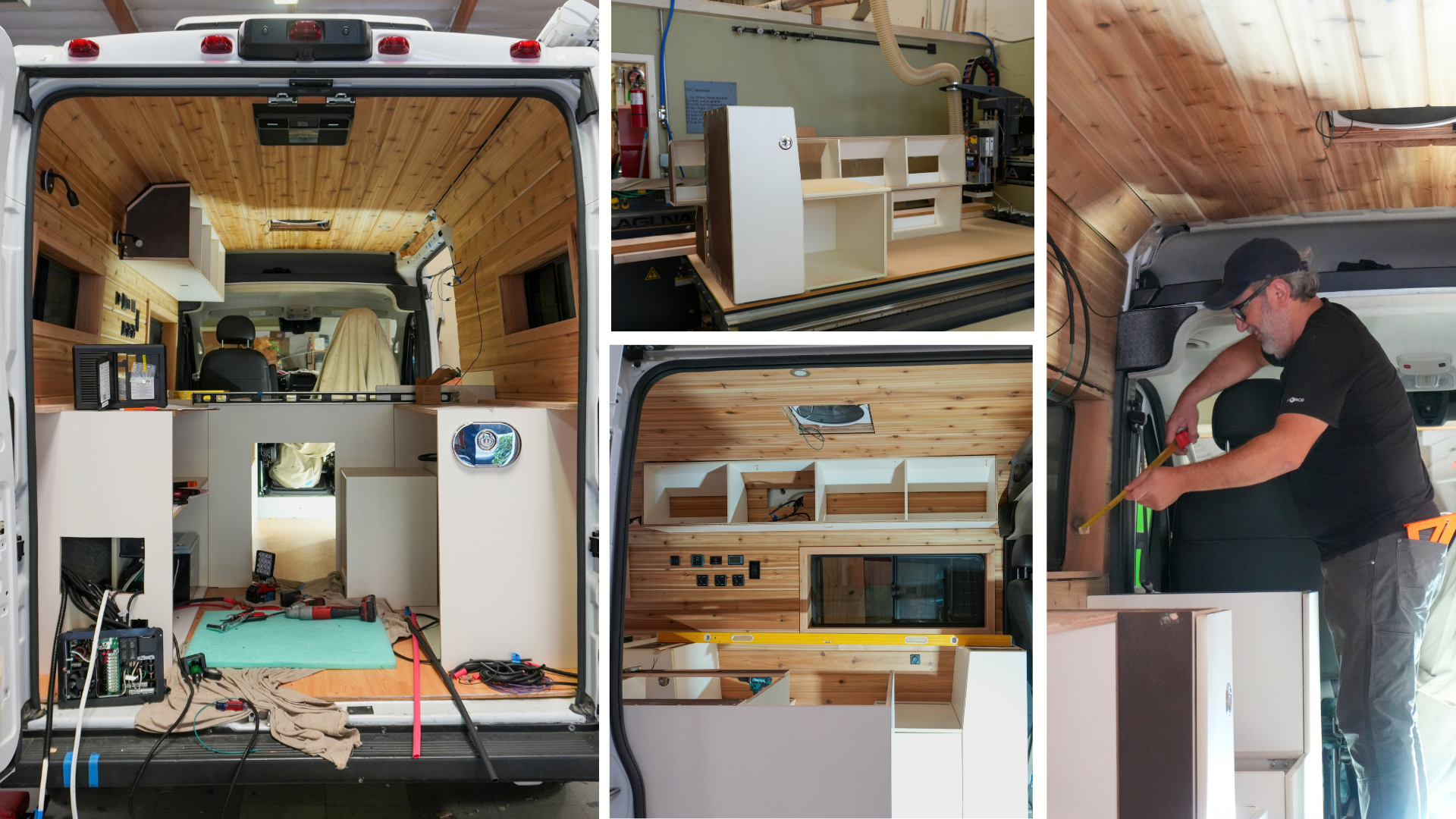
It's easier to see all of this in a specific van. We're a little past the halfway point on a build right now that shows what it looks like from the inside. The clients are a retired couple who came to us with a clear picture of what they wanted and a few ideas that didn't quite fit together yet. This post covers how the design came together. Part two will show the finished van.
Listening for the Words That Come Back
Joseph is usually the first person a client talks to, and he remains their point of contact through the entire project. Most of his early work is listening closely, and on a custom build, that shapes more of the van than any single design decision.
The way Joseph tells it, most clients already have a vision, even if they haven't put it into words yet. It shows up in what they keep coming back to, the things they bring up on the first call and mention again on the third. His early job is to notice those threads and let them set the direction. The details a client returns to usually end up steering the build.
For this couple, the words were "homey cabin." Those two words came up again and again, and they became the test for nearly every decision afterward. "They tell me everything I need to know," Joseph says. "I just have to go get the pieces and plug them in."
The Cedar Was Non-Negotiable
Most of what they brought were ideas they were open to talking through. The cedar was the one thing that wasn't up for discussion. They wanted knotty cedar tongue and groove on the walls and ceiling, and if we had said we couldn't do it, we wouldn't have gotten the job.
We could, and we did. It's not something you see in many vans, and it does a lot of the work of making the interior feel like a cabin instead of a vehicle. It also set up some of the more interesting design problems later, because once the walls, ceiling, and floor are all wood, every other design choice has to be considered in relation to them.
What They Asked For and What We Designed
A custom build ends up being a mix of ideas the clients bring in and solutions the shop comes up with. On this van it broke down roughly like this.
A table sized to their game board. They play Super Scrabble most evenings, which is the same game on a noticeably bigger board, and a table that fit it was close to the top of their list. The van has two bench seats facing each other, and the table between them is sized to fit the board.
A pullout pantry. This one came straight from them. They asked if we could build it, and we built it.
Drawers that are also steps. Their platform bed sits level with the galley, which is a high step up for some people. They were worried about getting in and out of bed, and a ladder would have either hung in the way or taken up storage. We designed the galley drawers so that when they pull out, a platform on top of each one forms a step. The drawers still hold things, and nothing extra lives in the van.
Cabinets that don't read as wood. Their first instinct was wood surfaces everywhere. With cedar on the walls and ceiling and a wood floor, cabinets in a matching wood finish would have been too much of one thing. "That can't just be a wood tunnel," Joseph says. We talked through it and finished the cabinets in a neutral laminate instead, with the cushions chosen as a pop of color.
A sink and stove chosen for them. People often assume there's one standard setup for a van kitchen. There isn't, and theirs was selected specifically for how they cook.
The smaller choices followed from there. Lighting placement, dimmers, and how the windows were trimmed out all came back to whether it felt homey.
Where All-Electric Ran Into Reality
When we first talked with this couple at a community event in our parking lot, they were firm about wanting the van to be all electric, with no propane on board.
Joseph didn't tell them no. He rarely does. Instead he walked them through what an all-electric setup would actually mean for them. A stove and a heater are two of the heaviest draws in a van, and running both off the batteries means watching your power levels or staying near a place to plug in.
That pulls against the part they cared about most. Propane does the heavy lifting instead of the batteries. The stove burns it directly, and the furnace runs on it for heat while drawing only the small amount of power its fan needs, so nobody has to watch a battery gauge before cooking or warming up the van. Once Joseph laid that out, they decided propane made more sense, and both run on it now.
His reasoning had to do with how the van would feel to live in day to day. "If you want it to feel like home, at home you cook when you're ready to cook," he says. "When you want to turn your heat on, you turn your heat on."
That's a pattern that shows up on most builds. Clients often want a few things that pull against each other, and the job is to lay out the tradeoff so they can decide what matters most. "I know that you said you want this, but you also said you want this," Joseph says. "To me those two things don't go together, but you get to make that decision."
The Timeline Question
People want to know how long a build will take and when they can expect to take delivery. That's a fair thing to ask early, and on a custom build part of the answer depends on you, because the design phase moves at the pace of the client's decisions.
This couple took their time deciding, and for a design with this many pieces fitting together, that was the right call. Joseph's view on the pace of a build has changed the longer he's done this job.
"It's not about my timetable, or when it's convenient to pull vans in," he says. "It's about their timetable and when they're ready. When they're ready and what we're building is what they want, that seems to be when we have the most success."
The pace is primarily set by how fast the decisions get made. Once a client has settled what they want, the build moves on it. The part Joseph won't rush is the front end, because a decision made too fast tends to be the one people regret once they're living in the van.
Where the Van Is Now
The cedar is in, and the van is a little more than halfway built. The drawer steps aren't installed yet, which is one of several reasons this story comes in two parts.
If you're comparing builders, it's worth asking what happens when your list includes something that isn't on theirs. For this couple it was cedar walls and a table built around a game board. For you it might be something else entirely. In part two, we'll show the finished van and how it turned out.
Reach Out
Every custom build starts with someone describing how they want to use their van.
If you're weighing options or just want to think out loud with someone who's built a lot of custom vans, we're happy to help.
Most of these conversations start the same way yours probably would: "Here's how I want to use it. What makes sense?" That's the right place to start.
Call Joseph at 888-332-9602 or send us a message here and he’ll get back to you.
Stay in the loop
Our newsletter is where we share what we're learning, thinking about, and building at the shop. Platform insights, practical advice, and the kind of detail that tends to matter more over time.
No hype. No spam. Just useful perspective from people who do this every day.
Subscribe to the GTRV newsletter
