
Most of These Happen Before the Build Even Starts
If you've been researching camper vans for a while, you've probably come across lists of things that can go wrong with a build. Wrong materials, poor layout choices, systems that don't hold up. Those are real problems, but most professional builders have already solved for them.
The mistakes we see most often at GTRV happen earlier than that. They happen during the thinking phase, when you're still forming your picture of what this van is going to be and how it's going to fit into your life. These are the ones that are harder to undo, because by the time you notice them, the van is already built.
This post is about where people actually go wrong. If you're just getting started in this process, our First-Time Buyer's Guide to Camper Vans covers the big-picture decisions.
Underestimating How Much You'll Actually Use It
This might be the most significant mistake on this list, and it's the one people are least aware of.
The average RV owner in the U.S. uses their vehicle about 20 to 25 days per year. Some people use theirs more. Plenty use theirs less. But almost everyone, during the buying process, imagines they'll use it more than they actually will.
That's important because it shapes everything. How much you spend. How complex the build is. What systems you invest in. If you're genuinely going to be out 60 or 80 nights a year, a full electrical system with solar, a heater, and a well-designed kitchen makes sense. If the honest answer is closer to a few long weekends and one or two bigger trips, you might be better off with a simpler build that's easier to maintain and less expensive to own.
The point is making sure the van you build matches the life you're actually going to live, not the one you're imagining during the most exciting part of the research process.
It helps to look at your calendar from the last year or two. How many weekends did you actually get away? How many weeks of vacation did you take? That pattern is usually a better predictor than your intentions.
Planning for Someone Else's Trip
The internet is full of beautifully documented van builds, and it's natural to look at those and think, "I want that." The problem is that what you're really looking at is someone else's travel pattern, dressed up in good photography.
A couple who works remotely and spends months at a time on the road needs a very different van from a family that does long weekends and a two-week summer trip. Someone who camps mostly at established sites with hookups has different priorities from someone who boondocks on forest roads for days at a stretch.
But those distinctions get blurry online. You see a gorgeous build with a huge battery bank, a full outdoor shower, and a roof rack loaded with gear, and it starts to feel like that's what a camper van is supposed to be. It becomes the reference point.
Better to start with your actual trips. Where do you go? How long do you stay? What do you do during the day? The answers almost always point toward a different set of priorities than whatever you've been admiring online.
We've written more about how to think through this in Which Camper Van Is Right for You? and The 80/20 Rule of Van Design.
Not Spending Real Time in a Van Before Committing
Most first-time buyers have never spent more than a few minutes inside a camper van before they start the buying process. They've watched videos, scrolled through photos, maybe climbed into one at a dealer. But they haven't cooked a meal in one, slept in one overnight, or tried to get dressed in one on a cold morning.
That experience matters more than most people expect. Things that look fine in a video can feel very different in person. Ceiling height, how much room there is to move around another person, how loud the road noise is, how the bed actually feels after a full day of driving.
Renting a van for a long weekend, even if it's not the exact platform or layout you're considering, gives you something that research can't. It gives you a felt sense of the space. You start to notice things: where you instinctively reach, what annoys you by day two, how it feels to spend a rainy afternoon inside.
Some people come back from a rental more excited than before. Others realize they need a different size, a different layout, or more time before they commit. Either outcome saves you money.
Treating It as One Person's Decision
This comes up more often than people expect, and it's one of the more sensitive topics in the process. When two people are going to share a van, both of them need to be involved in the decisions. That sounds obvious, but it's not always what happens.
Often one person drives the research. They spend months in forums, watching videos, building spreadsheets. By the time they bring their partner into the conversation, they've already formed strong opinions about the platform, the layout, and the budget. The other person is starting from scratch and may not even know what questions to ask.
What we've seen over the years is that the conversations that go best are the ones where both people are in the room (or on the call) early. Not because they need to agree on everything from day one, but because they often want different things, and those differences are easier to work through before the build starts than after.
One person might care most about having a comfortable workspace. The other might prioritize a real bed that doesn't require any conversion. One might want to boondock. The other might want hookups and a hot shower every night. These aren't dealbreakers, but they do shape the design. And if they don't get surfaced early, they tend to show up as frustration later.
The best van builds tend to come from conversations where both people have been honest about what they actually want, even when those things are in tension. We've talked about why those early conversations matter in Before the Build, There's a Conversation.
Confusing "Well-Equipped" With "Well-Designed"
It's easy to look at a van with a long feature list and assume it's a better van. More solar. Bigger battery. Induction cooktop. Composting toilet. Full standing shower. Every feature solves a real problem. But stacking them together doesn't automatically create a van that's good to live in.
A well-designed van has a rhythm to it. Things are where you expect them. You can move through the space without thinking about it. The systems work together instead of competing for space, weight, and power. It feels simple even if the engineering behind it isn't.
A well-equipped van, on the other hand, can feel cluttered and over-complicated. More features mean more weight, more things that can break, more decisions to make every day. There's a point where adding one more capability actually makes the whole experience worse, because the van starts to feel like a system you're managing instead of a place you're living.
The distinction is hard to see in a spec sheet. It tends to show up after a few weeks of use, when the things you reach for every day are easy, and the things you included "just in case" are taking up space you wish you had back.
Underestimating the Cost of Owning the Van (Not Just Building It)
Most people, when they think about the cost of a camper van, focus on the build. What does the conversion cost? What does the base vehicle cost? How much is the electrical system?
Those numbers are important. But they're not the whole picture, and the gap between what people budget for and what they actually spend over the first few years tends to be wider than expected.
Insurance on a converted van isn't the same as insuring a regular vehicle. Depending on the platform, the build, and how the van is classified, premiums can range from reasonable to surprisingly high. It's worth getting a quote before you commit, not after.
Maintenance varies a lot by platform. A diesel Sprinter and a gas Transit don't cost the same to service, and the difference adds up over time. Tires for a full-size van aren't cheap, and most people go through them faster than they expect.
Storage is a cost that many buyers don't think about until the van is built. If it doesn't fit in your garage, and many full-size vans don't, you'll need somewhere to park it. Depending on where you live, that might mean a storage lot, a monthly driveway permit, or dealing with HOA rules.
Fuel is straightforward to estimate, but people tend to underestimate how much they'll drive. The trip to the trailhead is one thing. The trip to the grocery store, the campground, the dump station, and back adds up.
None of this should be a dealbreaker. But if you go in with a budget that only covers the build, the first year of ownership can feel more expensive than it should.
Not Thinking About Where the Van Lives When You're Not Traveling
You'll spend a lot more time with the van at home than you will on the road. That's true for almost everyone, and it's something that tends to get overlooked during the buying process, when all the energy is focused on the trips.
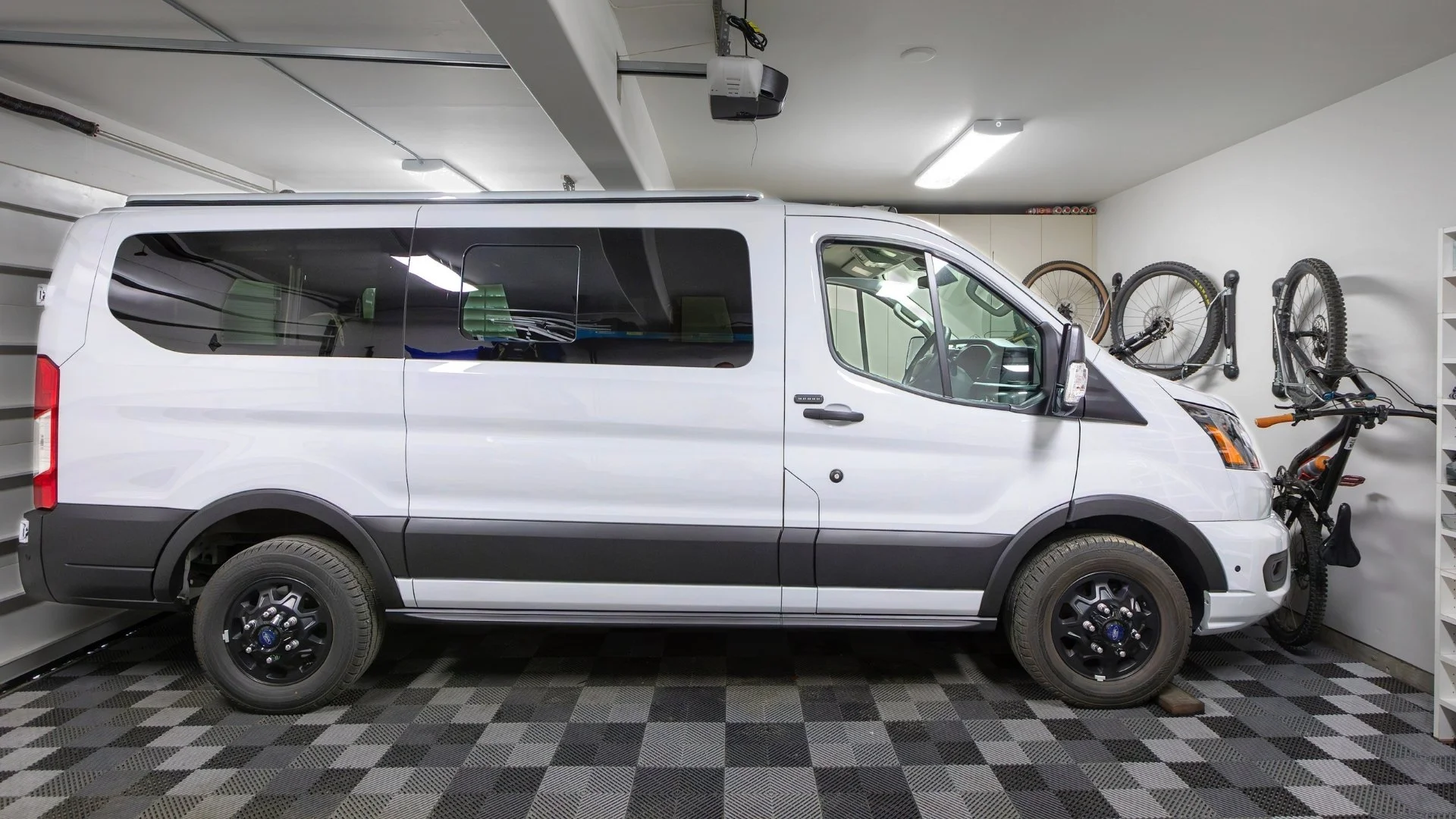
Height is the big one. A standard residential garage door is about 7 feet. A high-roof Sprinter or Transit is over 9. That means it's in the driveway, on the street, or at a storage facility. Depending on your neighborhood, any of those can come with complications: city parking restrictions, HOA rules, or just the logistical reality of keeping a large vehicle somewhere accessible.
Length matters too. A 170-inch wheelbase extended van is a different parking proposition than a standard-length vehicle. If you're in a dense neighborhood with tight streets, it's worth thinking about how that van fits into your day-to-day, not just your trips.
Pop-top conversions can help with the height issue, since the van sits at a normal profile when the top is down. It's one of the reasons a lot of our customers choose that route. But whatever direction you go, it's worth thinking through the "at home" picture before you buy.
The Real Goal Isn't Perfection
Nobody gets every decision right the first time. People who've owned three vans will tell you they're still learning what they want. That's normal, and it's not a reason to overthink every choice until you're paralyzed.
But the mistakes on this list have something in common: they all come from not stepping back far enough before diving into the details. The people who end up happiest with their vans tend to be the ones who were honest with themselves early on about how they travel, how much they'll use it, what they can spend (including after the build), and what the van needs to be when it's just sitting in the driveway.
If you can get those things roughly right, the rest of the process gets a lot easier.
Want to talk it through?
Most camper van mistakes happen before the build even starts. Talking things through with someone who's seen the patterns can save you a lot of time and money.
Most of these conversations start with the basics: how do you want to use your van? What makes sense for the way you actually travel? From there, we can start working toward the design choices that fit your life.
Call us at 888-332-9602 or send us a message here
Stay in the loop
Our newsletter is where we share what we're learning, thinking about, and building at the shop. Platform insights, practical advice, and the kind of detail that tends to matter more over time.
No hype. No spam. Just useful perspective from people who do this every day.
Subscribe to the GTRV newsletter
If you're still in research mode, these are good next steps:
A First-Time Buyer's Guide to Camper Vans
